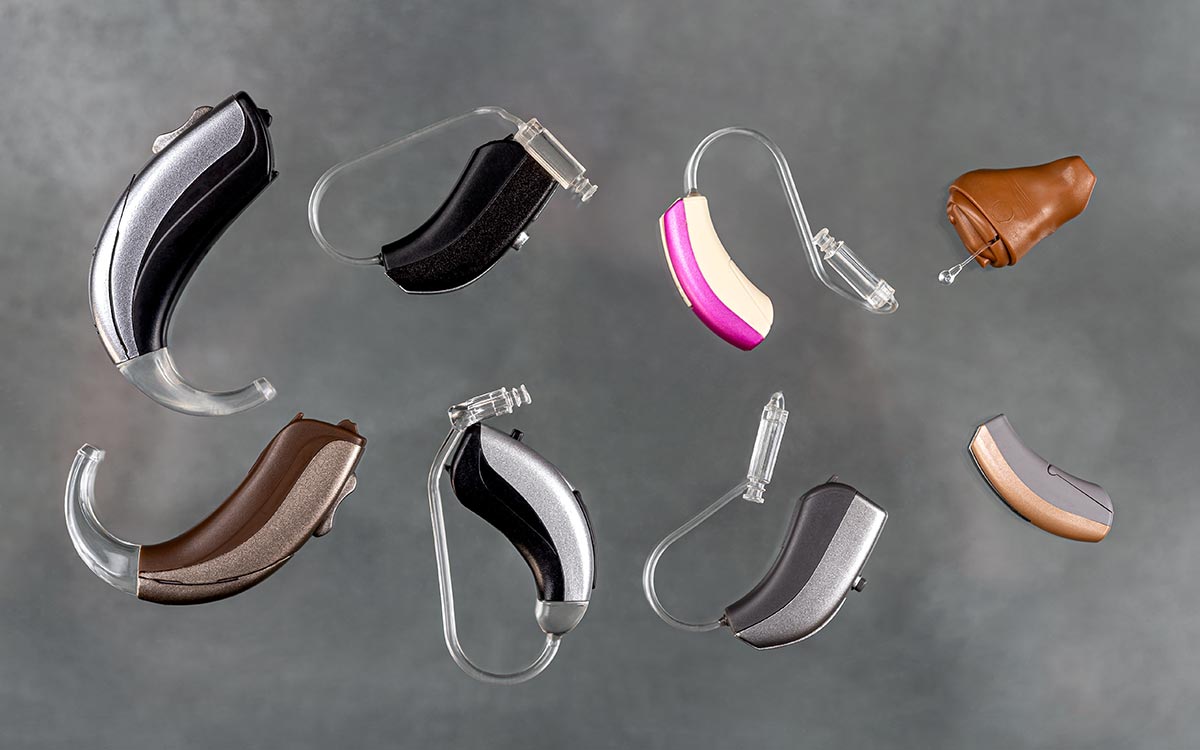
With so many choices in terms of dimensions, style, and technology, the process of picking a hearing aid can feel quite intense. But regardless of your needs, there’s a hearing solution for every lifestyle, preference, and degree of hearing loss or tinnitus. It’s all about learning which model aligns perfectly with your specific requirements.
Feeling positive about your choice begins with knowing how different hearing aids function and compare. In this breakdown, we look at current styles and the unique characteristics that define them.
ITC (In-the-Canal) Hearing Solutions
The Definition:
ITC models are custom-made to sit within the ear canal, though a small part of the shell remains visible in the ear’s outer portion.
The Advantages:
- Provides an understated appearance compared to traditional styles
- Custom-molded for comfort
- Appropriate for mild to medium hearing loss
First-time wearers often lean toward ITC aids because they strike a perfect compromise between size and performance.
IIC (Invisible-in-Canal) Engineering
What they are:
IIC models are the most tiny custom-fitted hearing solutions you can choose. This style rests deep in the ear for a completely covert appearance.
Primary Motivations:
- Offers the most understated look of any hearing aid style
- Strategic placement enables an incredibly organic listening experience
- Featherweight and comfortable
The small form factor of IIC models makes them perfect for mild hearing loss and anyone who values an invisible hearing solution.
Understanding In-the-Ear (ITE) Devices
Product Information:
ITE devices are constructed to stay in the outer ear area, offering two different shell sizes based on your anatomy. These are custom-fabricated for an exact match based on your ear’s anatomy.
Why users favor ITE:
- The larger size makes it possible to include more internal components and longer-lasting batteries
- Simpler to handle for those with dexterity challenges
- An adaptable choice that can address even significant levels of hearing loss
Users often choose these models for their straightforward, single-piece construction that avoids any external wiring or tubing.
Behind-the-Ear (BTE) Hearing Aids
Functionality:
These devices rest on the external ridge of the ear’s anatomy. Audio travels into the ear canal through an internal tube or custom earmold.
Key Advantages:
- Known for being exceptionally adaptable and robust
- Provides an extensive range of amplification suitable for nearly any user
- The spacious housing allows for high-tech extras and built-in power cells
The combination of ease of use and strong sound makes BTE aids a top contender for many patients.
Receiver-in-Canal (RIC) Hearing Aids
Component Layout:
While they resemble BTE units, RIC aids place the speaker directly in the canal for better sound delivery.
Why users select them:
- Very organic sound quality
- Users value the slim design and comfortable fit for all-day use
- Flexible enough to treat an extensive range of hearing impairments
The combination of style and high-end functionality renders RIC models an ideal choice in the modern market.
Extended-Wear Hearing Aids
Operational Info:
Extended-wear models are semi-permanent units that an expert fits into the ear for an interval of several weeks.
The Appeal:
- Eliminates the requirement to place in or take out the device every day
- Offers an entirely discreet solution for hearing health
- Engineering allows them to remain in the ear during all facets of daily life
Extended-wear devices are perfect for patients who want an effortless approach.
Bluetooth-Enabled Hearing Aids
Tech Details:
Bluetooth-ready hearing aids enable a wireless digital bridge between your hearing technology and your smart devices.
Why go cordless:
- Allows for sharp voice calls and media streamed directly to the device
- Provides an unobtrusive method to manage your hearing environment from your mobile screen
- Provides the ultimate in ease for those who use smartphones regularly
This wireless technology is found in most modern behind-the-ear and in-the-canal models.
Surgically Placed Middle-Ear Systems
Design Overview:
An implantable method that works by shaking the tiny bones inside the ear to provide amplified audio.
Medical Motivations:
- Option for people who cannot use traditional hearing aids
- This is a specialized choice for those with chronic ear canal sensitivity.
These devices need a thorough medical review by an ear, nose, and throat expert.
Choosing the Right Style for Yourself
Every hearing aid style offers its own benefits, and the right option depends on your level of hearing loss, comfort preferences, lifestyle, hearing test results, and cosmetic considerations. By visiting an expert, you can explore various models and see which one feels most natural to you.
Start moving toward an environment of superior sound by arranging an appointment with an expert specialist. It’s a great first move toward better hearing and more confident communication every day.
Sources:
https://www.mayoclinic.org/diseases-conditions/hearing-loss/in-depth/hearing-aids/art-
20044116
https://www.hearinglife.com/hearing-aids/types
https://www.nidcd.nih.gov/health/hearing-aids